
What Fireworks Do to Captive Animals
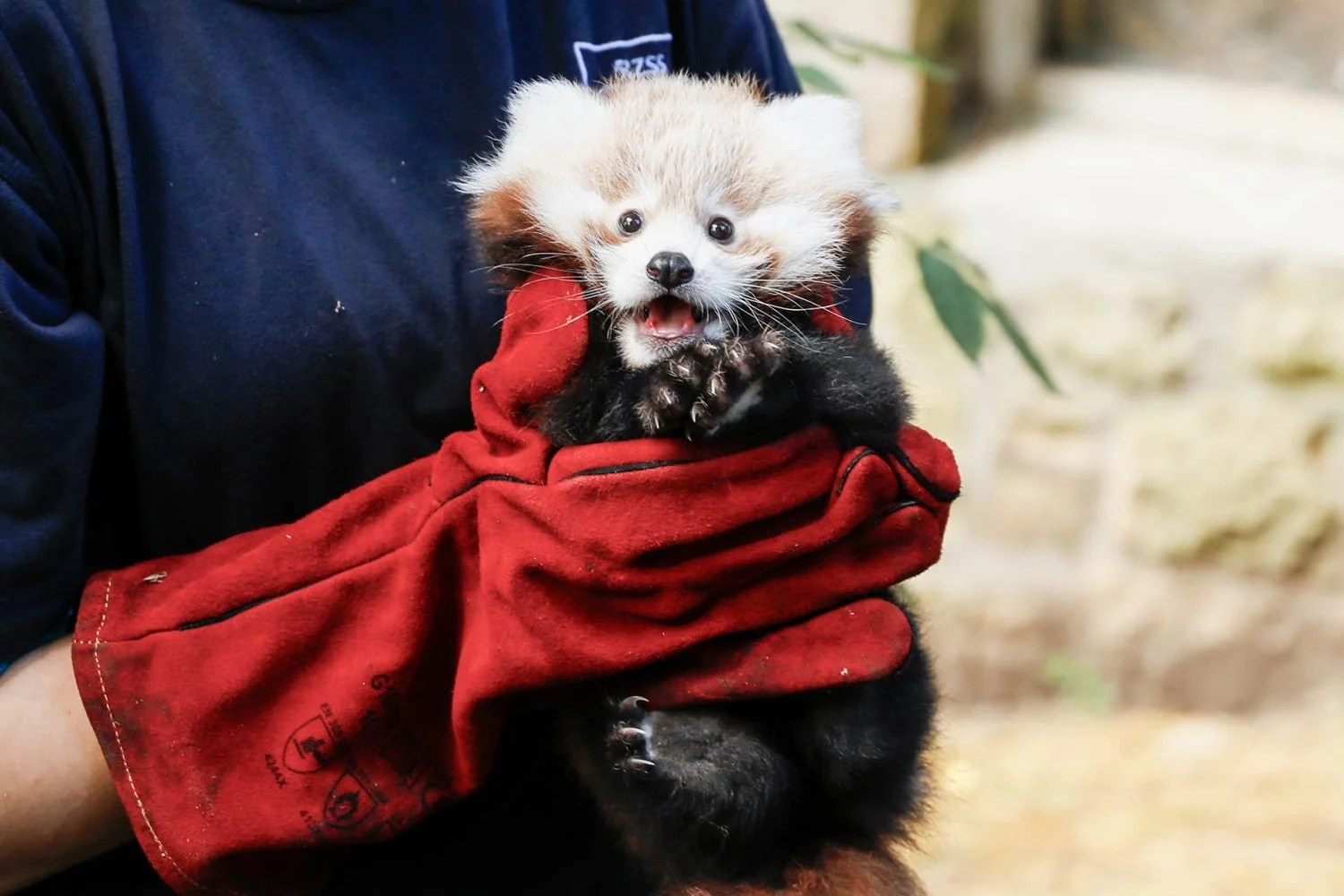
Roxie the red panda. Photo via Edinburgh Zoo
Fireworks are built to be overwhelm the senses. That's the whole point — a sudden and jolting combination of sound and light, creating a shockwave you can feel in your chest. For adult humans, that feeling of being overwhelmed is entertainment. For an animal that has no context or understanding of what's happening or why, it's more akin to an emergency.
In November 2024, a three-month-old red panda named Roxie died at Edinburgh Zoo on Bonfire Night, an annual celebration across the United Kingdom. Rosie choked on her own vomit as fireworks went off across the city, and her veterinarians concluded it was almost certainly a stress reaction to the fireworks. She had access to her den that she could retreat into, but it wasn't enough. Her mother, Ginger, had tragically died five days earlier under similar circumstances; the zoo later said it couldn't rule out that fireworks contributed to her death as well.
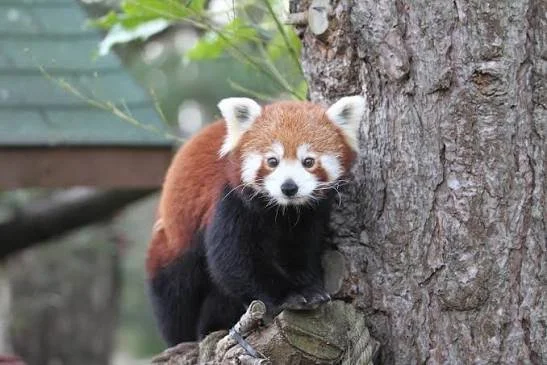
Roxie’s mother Ginger died just five days before her kit, during the same fireworks season. The zoo said it could not rule out fireworks as the cause of death. Photo via Edinburgh Zoo.
What makes this case worth understanding isn’t that it’s somehow exceptional. It’s the fact that it happened at a well-resourced, highly-regarded zoo, to an animal with shelter available. It was triggered by fireworks the zoo itself didn't even set off — these were the standard, citywide Bonfire Night celebrations, happening at a distance from the animals.
Why sound and light hit captive animals harder
Stress responses to sudden loud noise are biologically ancient and mostly involuntary. They’re a reflex tied to the same fight-or-flight instincts that help a wild animal survive being ambushed by a predator or a massive thunderstorm. They don’t know the difference between a real threat and a fireworks display. What differs is what an animal can do about it. In the wild, a startled animal typically has options: distance, cover, a direction to run. In captivity, those options are eliminated by design: animals live inside the fixed walls of their enclosures. This means limited hiding structures, with sightlines and soundscapes built around visitor experience rather than the animal’s own internal sense of safety.
Elephants are a useful case study in why this matters for large and extremely socially complex species in particular. Elephants communicate over vast distances, partly through infrasound — audio frequencies below the range of human hearing. Their auditory range and sensitivity are well documented in the research literature: A 2019 study published in the journal Animals (Jakob-Hoff et al.) exposed a number of zoo animals, including elephants, to both continuous and intermittent construction noise, and found consistent changes in their behavior: those elephants exposed to continuous noise moved toward quieter parts of their environment when that option existed. This finding is almost totally mundane on its face — of course an animal moves away from an unpleasant noise if it can actually do so — but it makes clear something important: creating distance from the noise source actually functions as a coping mechanism that elephants use, when it’s available to them.
When there’s nowhere to go
It’s worth considering that detail when evaluating any captive environment that pairs animals with a recurring source of loud noise and/or bright, sudden flashes of light: not simply whether the noise happens, but whether the animal has anywhere to retreat to when it does. A rare or single loud event an animal can physically move away from is a very different welfare scenario than a similarly loud, bright event the animal is enclosed within or underneath, repeated on a schedule, for years. Our reporting on Busch Gardens Tampa — where an open-air elephant enclosure is surrounded by roller coasters on all sides, and subject to a regular fireworks schedule — has documented a clear version of that second scenario, including a 2022 incident in which an elephant named Rosie collapsed during a fireworks show and did not stand again for five hours. She never fully recovered, and was euthanized two years later. That details of that investigation are available in full here.
A shift already underway
Roxie’s death prompted grief, but also a policy response. In 2025, the City of Edinburgh declared a firework exclusion zone around the zoo, legally enforced by police and subject to fines of up to £5,000 for violations. The Royal Zoological Society of Scotland, which runs the zoo, has gone even further by backing a full ban on public firework sales in favor of organized drone or light displays. It’s a useful marker of where institutional thinking on this question is heading: sensory environment — not just space, diet, or veterinary care — is increasingly understood as a welfare issue in its own right, one that facilities are expected to actively manage rather than simply absorb.
The next time fireworks show up at a zoo, aquarium, or sanctuary near you — whether as a park attraction or an unrelated event nearby — it’s worth asking the question Edinburgh eventually did: not just “is this animal provided shelter?” but “does this animal have anywhere to go?”
