
Welfare Complaints Filed.
Employees Silenced.
No Action Taken.
What’s Really Happening at Busch Gardens Tampa?
"Their priorities do not lie with the welfare of the animals. They lie with profit and ego. This issue is not limited to the park boundaries of Busch Gardens Tampa Bay. It reaches every park, every facility, owned by this company. And unless the entire system experiences a significant overhaul, nothing within the corporation will change."
—excerpt from an anonymous report sent to WEP
A Lack of Accountability
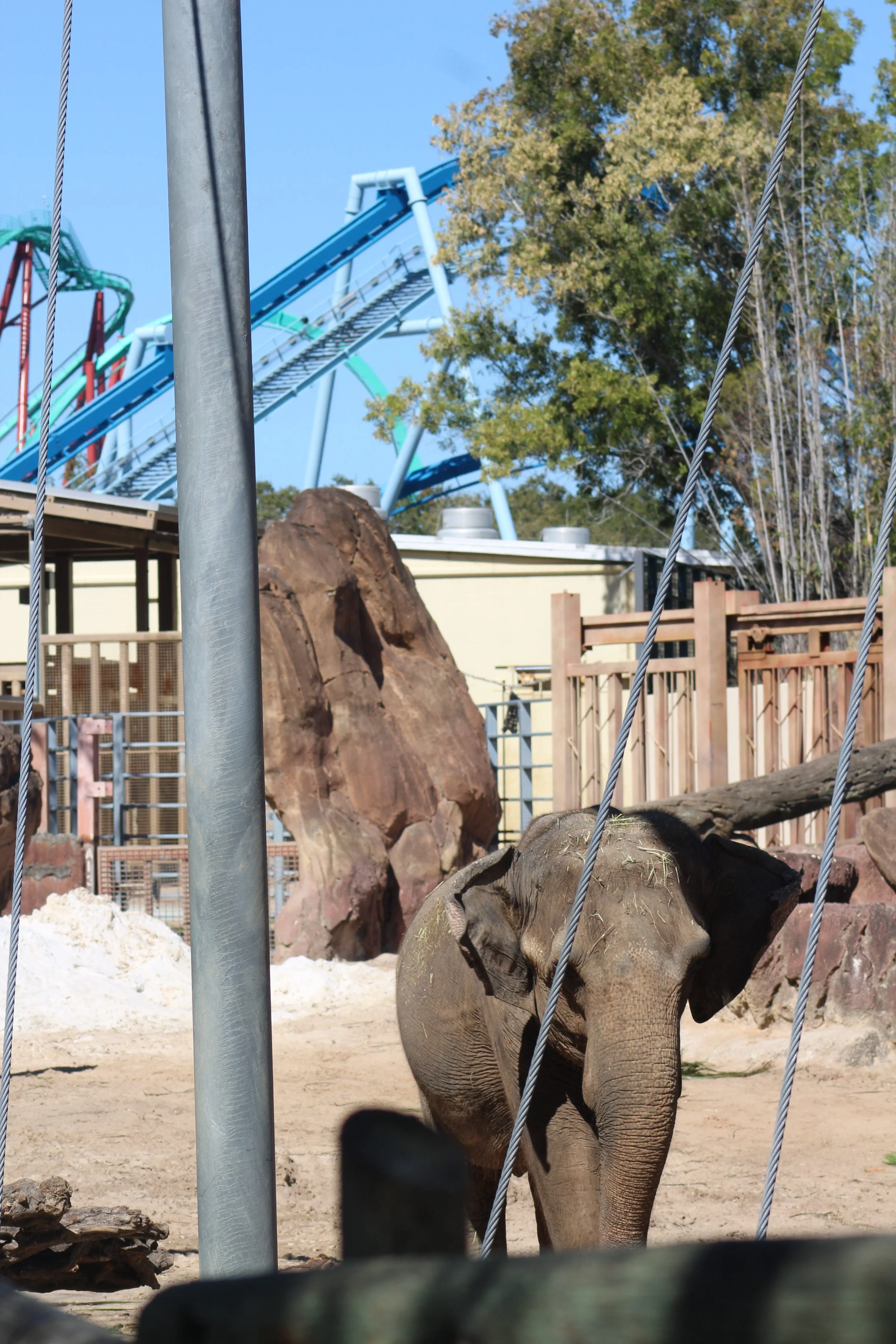
Keepers raised welfare concerns with Busch Gardens management. Change never came.
They were told to stop documenting
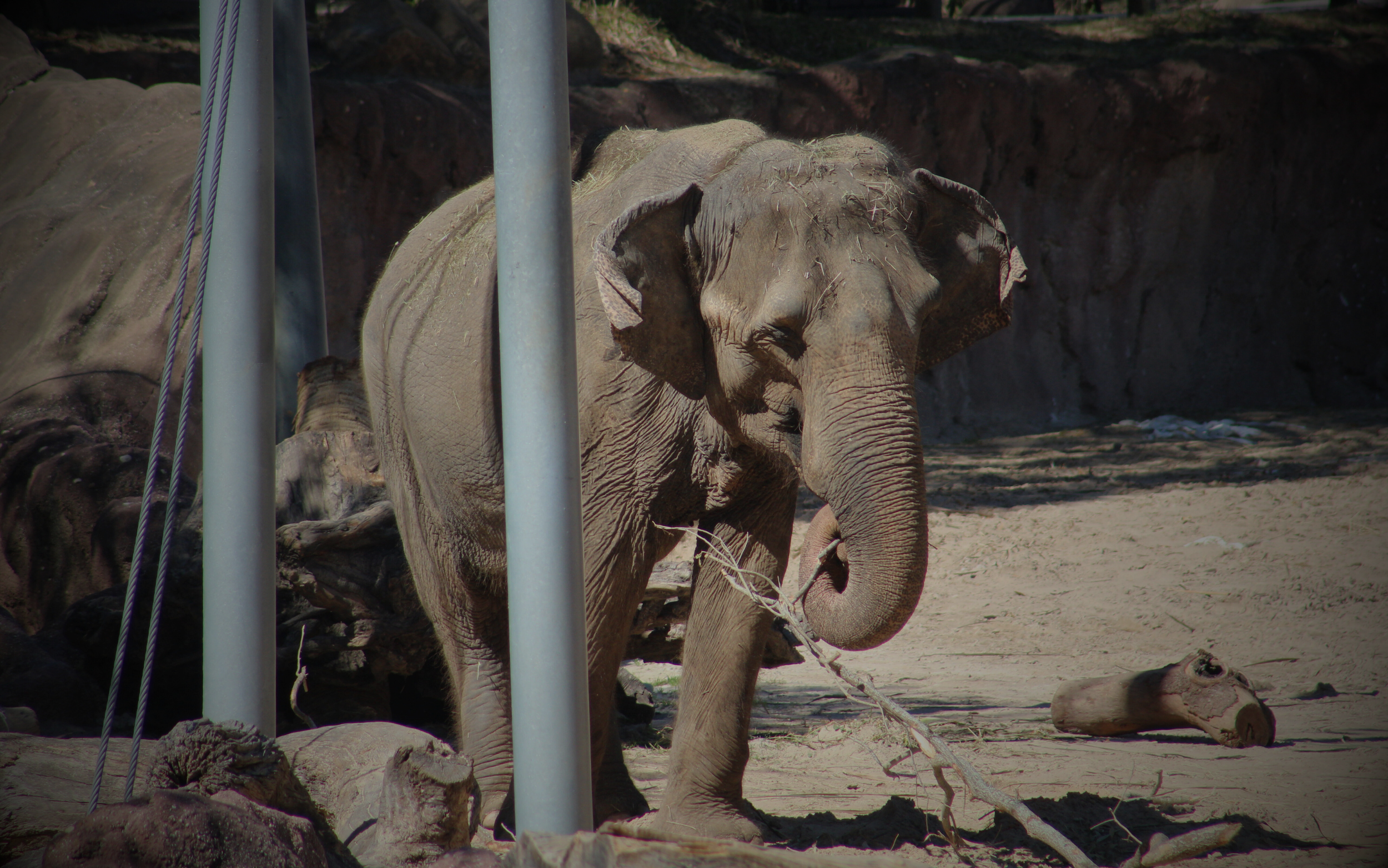
Rather than addressing the concerns, management told keepers not to document the elephants' negative reactions to stressors such as fireworks, rides, and roller coaster construction. With no response from internal staff, keepers took their concerns outside, filing formal reports with the Association of Zoos and Aquariums (AZA) and the United States Department of Agriculture (USDA) in October 2024.
Two years later, the conditions remain
There hasn’t been a comprehensive investigation by either organization. Nothing the keepers described has changed.
Two elephants euthanized, two years apart
In July 2026, Carina, a 54-year-old Asian elephant, was euthanized after what the company called a "sudden decline." Almost exactly two years earlier, Rosie was euthanized at the same age, from injuries she suffered after being knocked down by another elephant while in distress during the park's fireworks show.
The accreditation still stands
Through all of it, Busch Gardens' AZA accreditation remains unaffected. It is worth asking why. Chris Dold, chief zoological officer of parent company United Parks & Resorts, became chair of the AZA board in October 2025, the same body meant to hold the facility accountable.
Busch Gardens has not answered for the conditions in which its elephants live. We can change that.
The Environment
No Refuge from the Noise
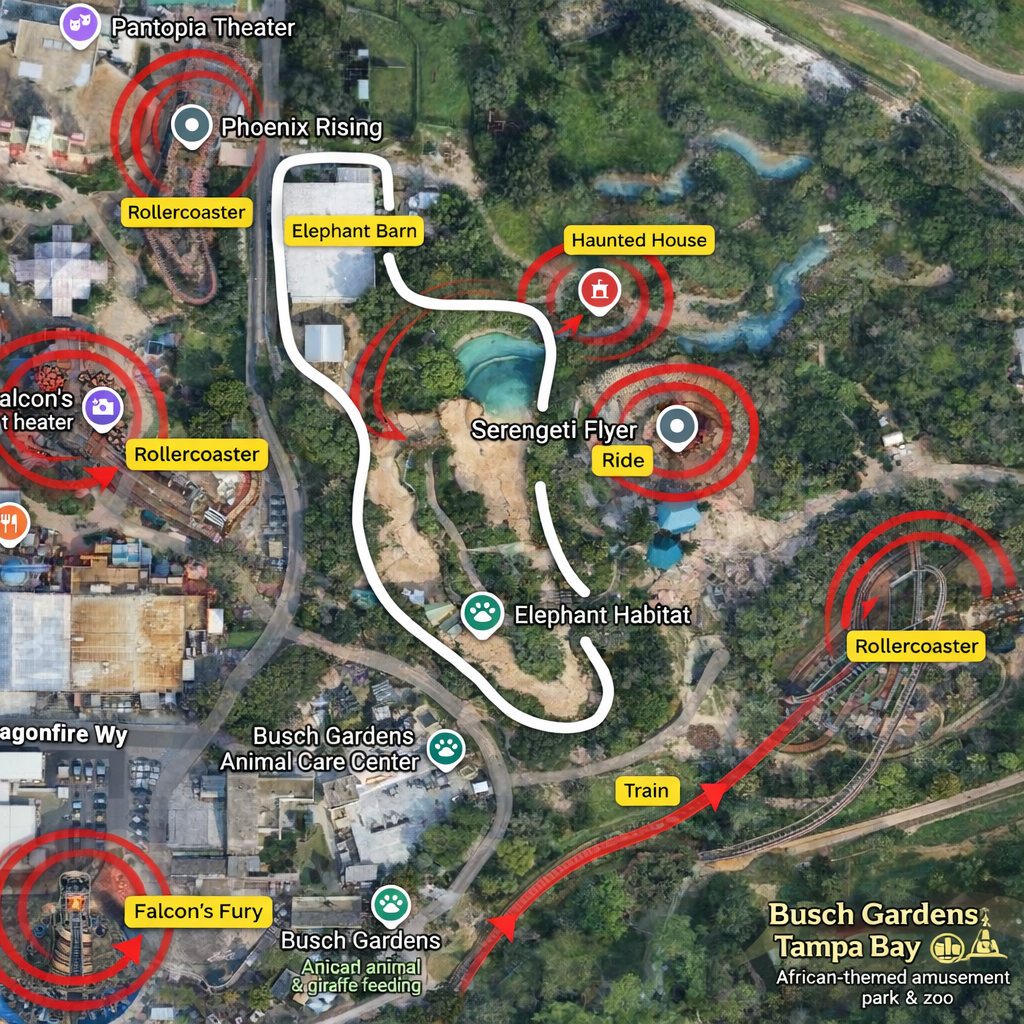
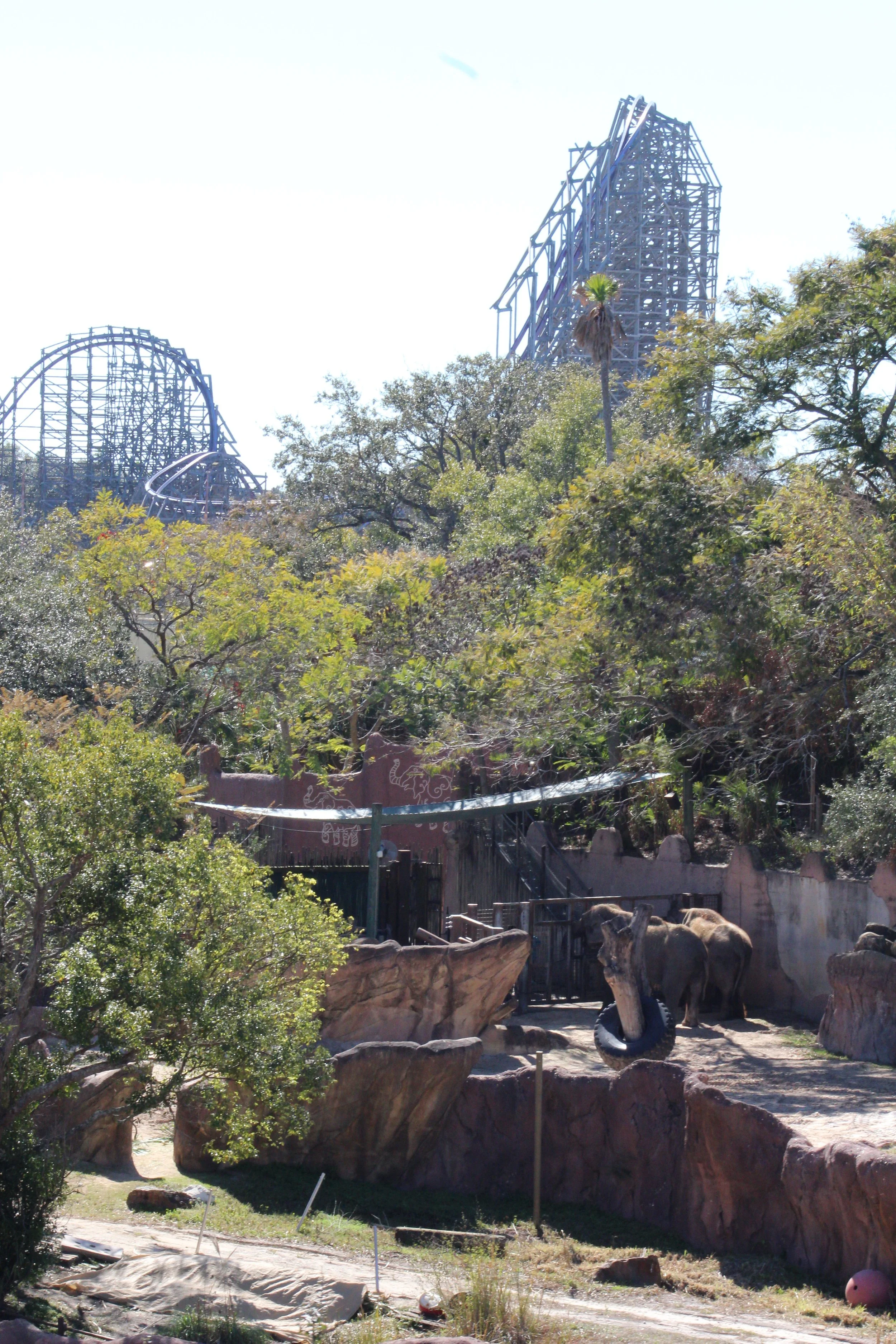
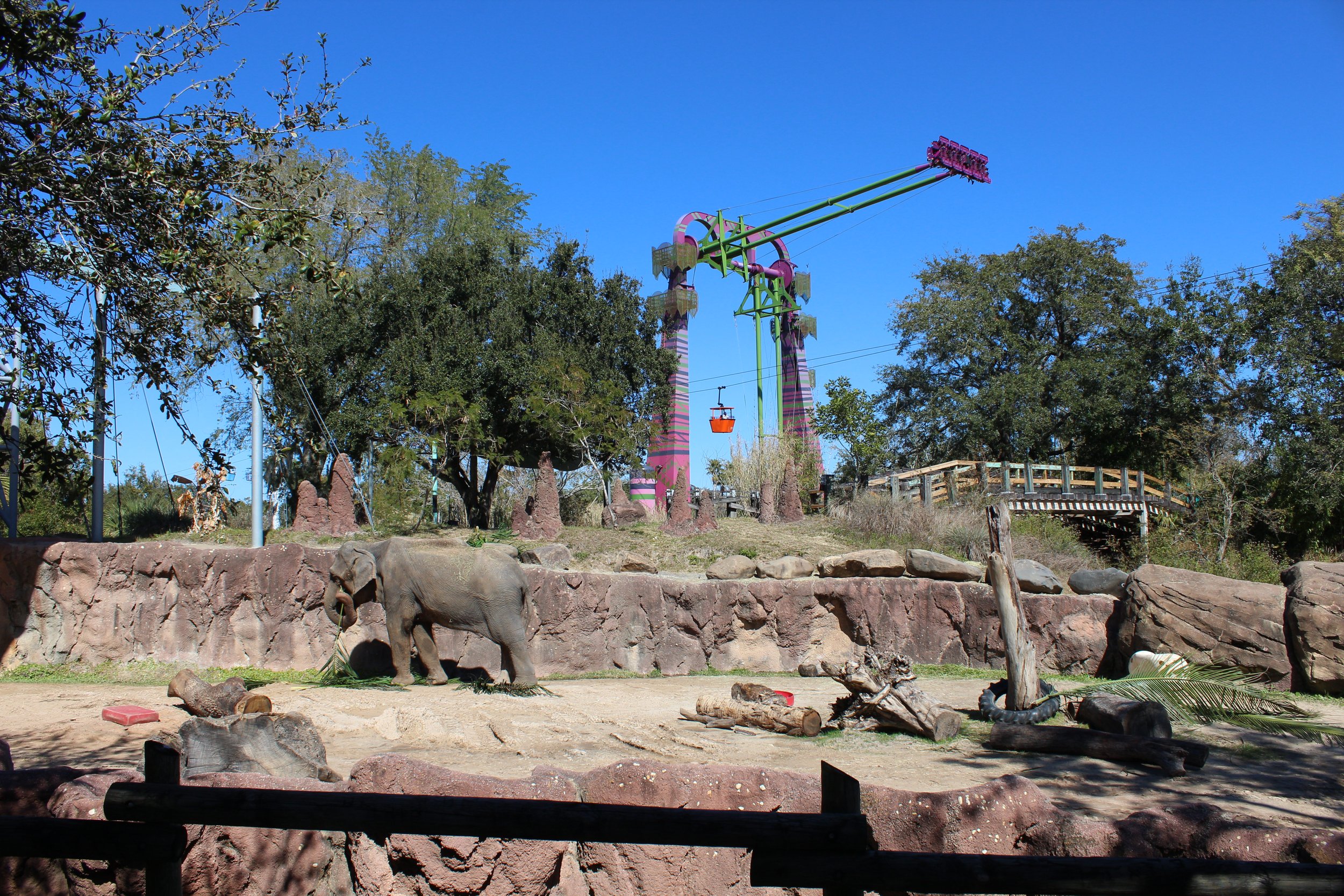
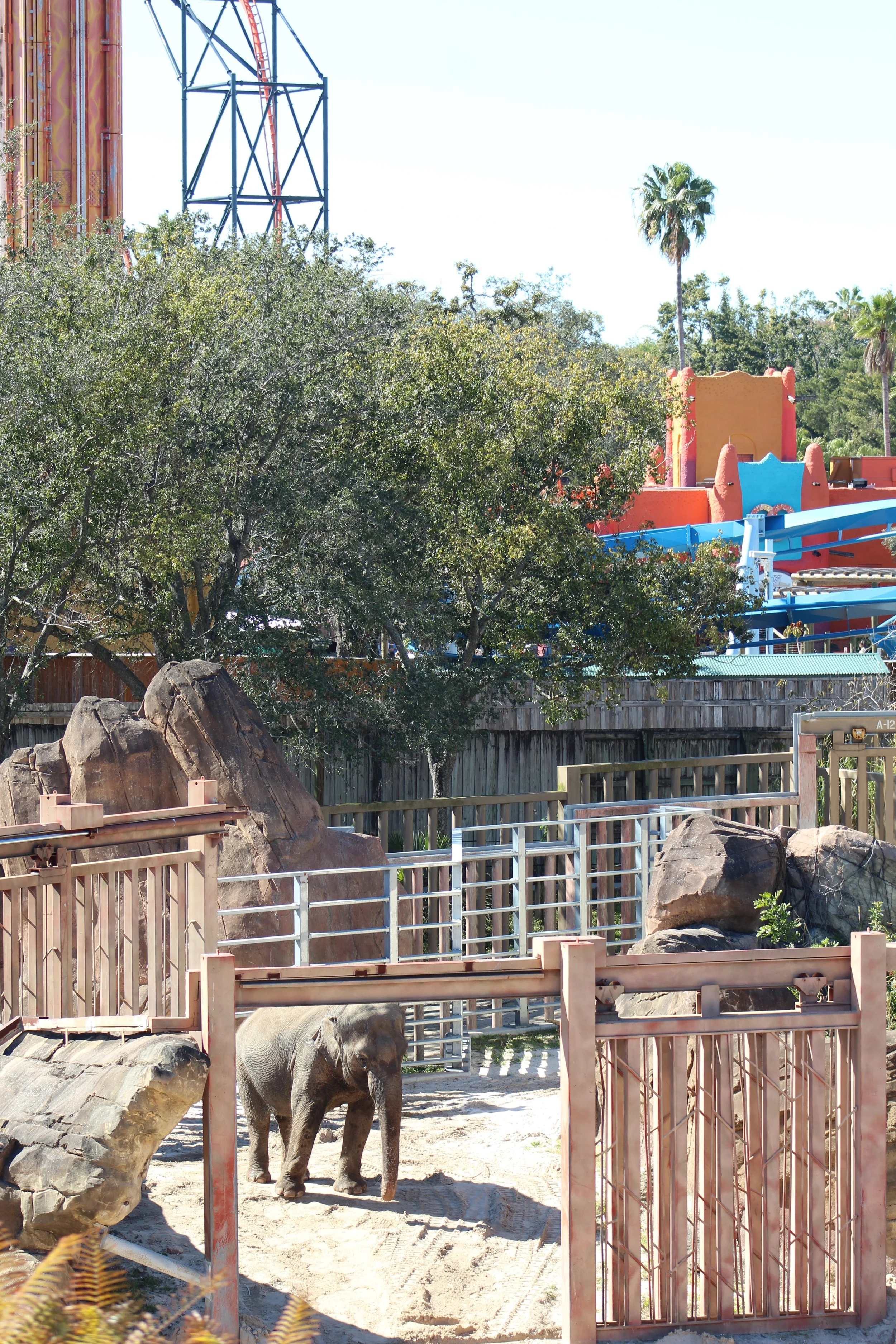
The elephant enclosure at Busch Gardens, encircled by roller coasters, rides, and attractions.
Elephants are acutely sensitive to noise and vibration, and here there is no escape from either. That constant disruption reaches even their ability to communicate with one another, which depends on feeling low rumbles through their feet, at frequencies too low for humans to hear.

The Oversight
A Conflict of Interest
"AZA's chair is Dr. Chris Dold, who is SeaWorld Parks Chief Zoological Officer... He's been aware of all these welfare issues, and he's done nothing. Chris is also spearheading the AZA and USDA situation right now, where he's lobbying to prevent USDA and the Animal Welfare Act from having any say in AZA-accredited institutions..."
Rachel Hale, former keeper at Busch Gardens Tampa, 2018 to 2025
Read our full investigation into conditions at Busch Gardens, drawing on former employee interviews, a federal complaint, and anonymous submissions.
Timeline of Concerns
A Pattern of Harm, Silence, and Failed Oversight
A record of what keepers observed and documented for the Asian elephants at Busch Gardens Tampa, and how those concerns were met.
Hover or tap a moment to read it. Use the arrows to step through, year by year.
In the Words of Former Busch Gardens Employees…
Take Action: Add Your Name to Our Petitions to Speak Up For The Elephants
This campaign runs on people like you. If you're able, a donation helps us continue investigating and keeps the pressure on for the elephants at Busch Gardens.
 Support the Campaign
Frequently Asked Questions
-
Weeping Elephant Project has been contacted by multiple former elephant keepers from Busch Gardens Tampa who raised serious concerns about the welfare of the elephants in the park’s care. These individuals report that they followed internal and professional channels to address their concerns, including filing formal complaints with regulators, but saw no response or investigation.
When those systems failed, they reached out to us to help bring transparency and public attention to the situation.
-
Former keepers report that the elephants live in an environment surrounded on all sides by roller coasters, with an additional ride passing overhead and frequent fireworks nearby. Elephants are highly sensitive to noise, vibration, and visual disturbance, and keepers say they raised concerns about the long-term effects of these conditions. They also report being discouraged from fully documenting welfare concerns, particularly around fireworks and environmental stress.
In October 2024, formal complaints about the elephant program were filed with the Association of Zoos and Aquariums and the United States Department of Agriculture. Nearly two years later, there is no public sign of a response from either body. In July 2026, Carina, a 54 year old Asian elephant, was euthanized after what the company described as a sudden decline. Three elephants remain at the park: Karnaudi, Simba, and Tina. No independent review of their welfare has taken place.
-
Yes. Formal complaints were filed with both the U.S. Department of Agriculture (USDA) and the Association of Zoos & Aquariums (AZA) in October 2024. These are publicly accessible documents that WEP now possesses.
-
Busch Gardens Tampa is accredited by the Association of Zoos & Aquariums (AZA). AZA accreditation is voluntary and self-regulated. While AZA sets standards, it does not have the same enforcement powers as federal regulators.
This case raises broader questions about how welfare concerns are handled — even at high-profile, accredited facilities.
-
Stay informed, ask questions, and follow this campaign as we share verified information and documentation. Public awareness is a powerful driver of accountability, use your voice to speak up for the elephants by sending an email to Busch Gardens and United Parks in our letter campaign below.
-
No. We are not making legal determinations. Our focus is on transparency, accountability, and ensuring that welfare concerns raised by professionals are taken seriously and investigated appropriately.
We are requesting public records to better understand what oversight has occurred and whether existing protections are working as intended.
-
Weeping Elephant Project is a nonprofit organization working to end the use of elephants in entertainment and captivity through public education, documentation, and advocacy. We do not operate sanctuaries or conduct rescues.
Our work focuses on making systems visible — tracking elephants, amplifying credible concerns, and pushing for better standards and accountability.
-
According to the former keepers, they tried. They raised concerns internally and through professional channels, including regulators and accreditation bodies. When those pathways failed to produce action or even acknowledgment, they sought outside help.
Those who speak out often face significant personal and professional risk. Public accountability becomes essential when internal systems fail.
-
We are asking for:
Transparency around welfare conditions and oversight
Independent review of reported concerns
Accountability from regulators and accrediting bodies
A public conversation about whether elephants belong in high-intensity entertainment environments at all
-
We take source protection seriously. Former staff who contacted us are currently speaking only on background. We will not share identifying information without explicit consent.