
The Stories Zoos Tell—and the Reality Many People See
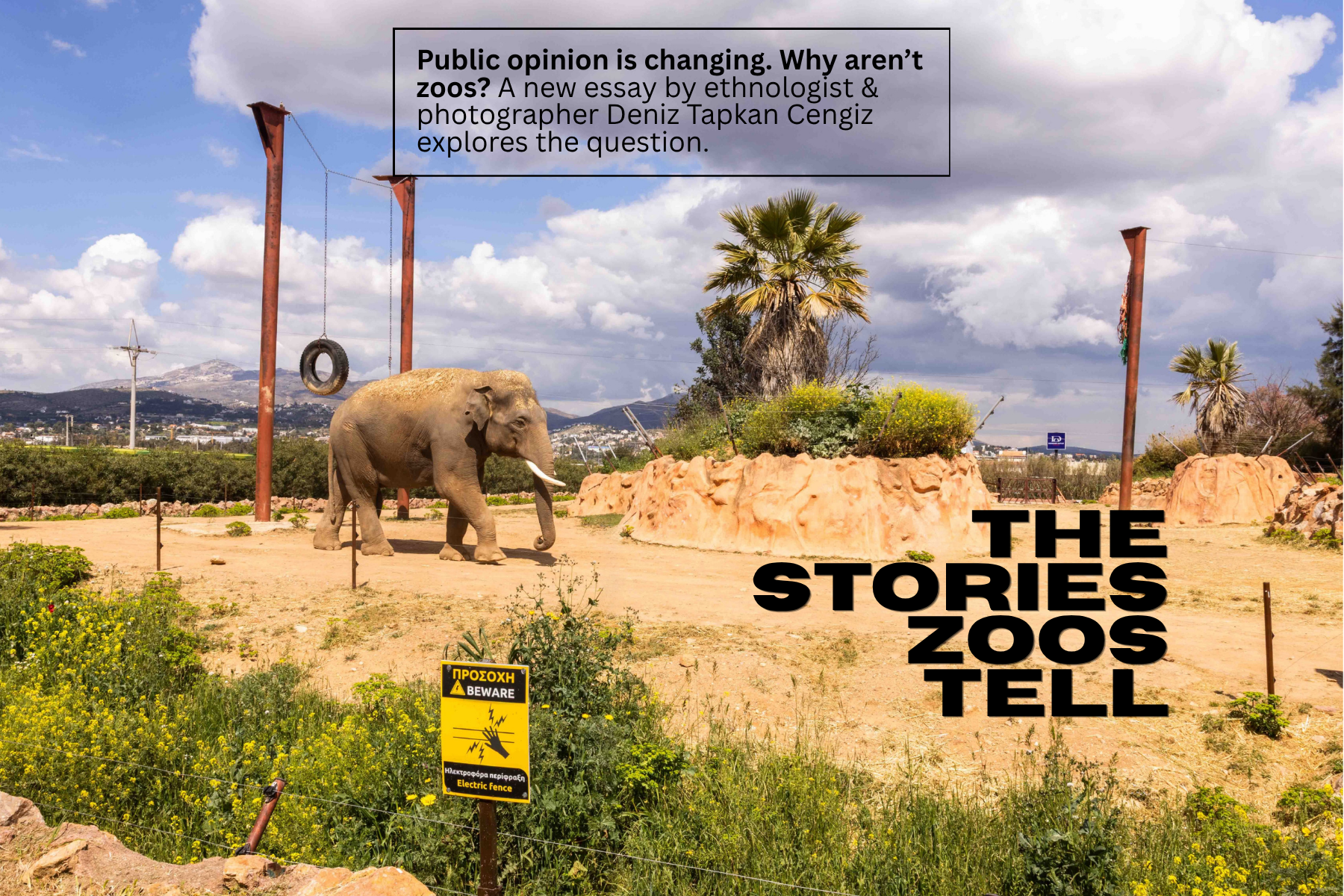
Attica Zoo, Athens, 2026, Deniz Tapkan Cengiz
For decades, zoos around the world have justified their existence through a familiar set of arguments. They conserve endangered species, educate the public, and inspire children to care about wildlife. They provide expert care for animals that might otherwise struggle to survive.
These claims have become so deeply embedded in public discourse that they’re rarely questioned. Zoos are presented not merely as places where animals are kept, but as institutions serving a greater good. The sight of an elephant standing in an enclosure, a tiger behind glass, or a chimpanzee in a constructed habitat is framed as a necessary compromise in service of conservation, education, and research.
Yet as public awareness of animal cognition, social complexity, and welfare continues to grow, many are beginning to view these institutions differently. Increasingly, visitors are asking whether the stories zoos tell about themselves still align with the reality of what they’re seeing.
A recent essay by ethologist and animal photojournalist Deniz Tapkan Cengiz explores this question in remarkable detail. Drawing on her experiences documenting captive animals around the world and studying animal behavior, Cengiz examines the foundations upon which modern zoos continue to justify their existence. Her conclusion isn’t simply that zoos need reform, but that the arguments used to defend captivity have become increasingly difficult to defend.
One of the most striking aspects of the essay is its examination of conservation. Zoos often present themselves as essential safeguards against extinction, yet Tapkan points out that the majority of animals held in zoos are not endangered species. Conservation scientists increasingly recognize that the greatest threats facing wildlife are habitat destruction, fragmentation, climate change, pollution, and exploitation. Saving species ultimately depends on protecting the places where they live, not simply maintaining populations behind fences.
The essay also challenges the educational value that zoos frequently claim to provide. Tapkan recounts watching schoolchildren move through zoo exhibits where animals displayed signs of stress, boredom, and confinement while teachers offered little context about the realities of captivity. What struck her wasn’t what the children learned about animals, but what they learned about human relationships with animals. The lesson being reinforced was that it’s normal for intelligent, socially complex beings to spend their lives on display for our observation.
This question feels especially relevant when we think about elephants.
For years, the public has been told that elephants in zoos serve an educational purpose. Yet most visitors will never see an elephant behaving as elephants do in the wild. They won’t witness the vast distances elephants travel, the complex social networks they maintain, or the countless decisions they make throughout the course of a day. Instead, they encounter a version of elephant life compressed into a small and artificial space, shaped as much by the constraints of captivity as by the animal’s own nature.
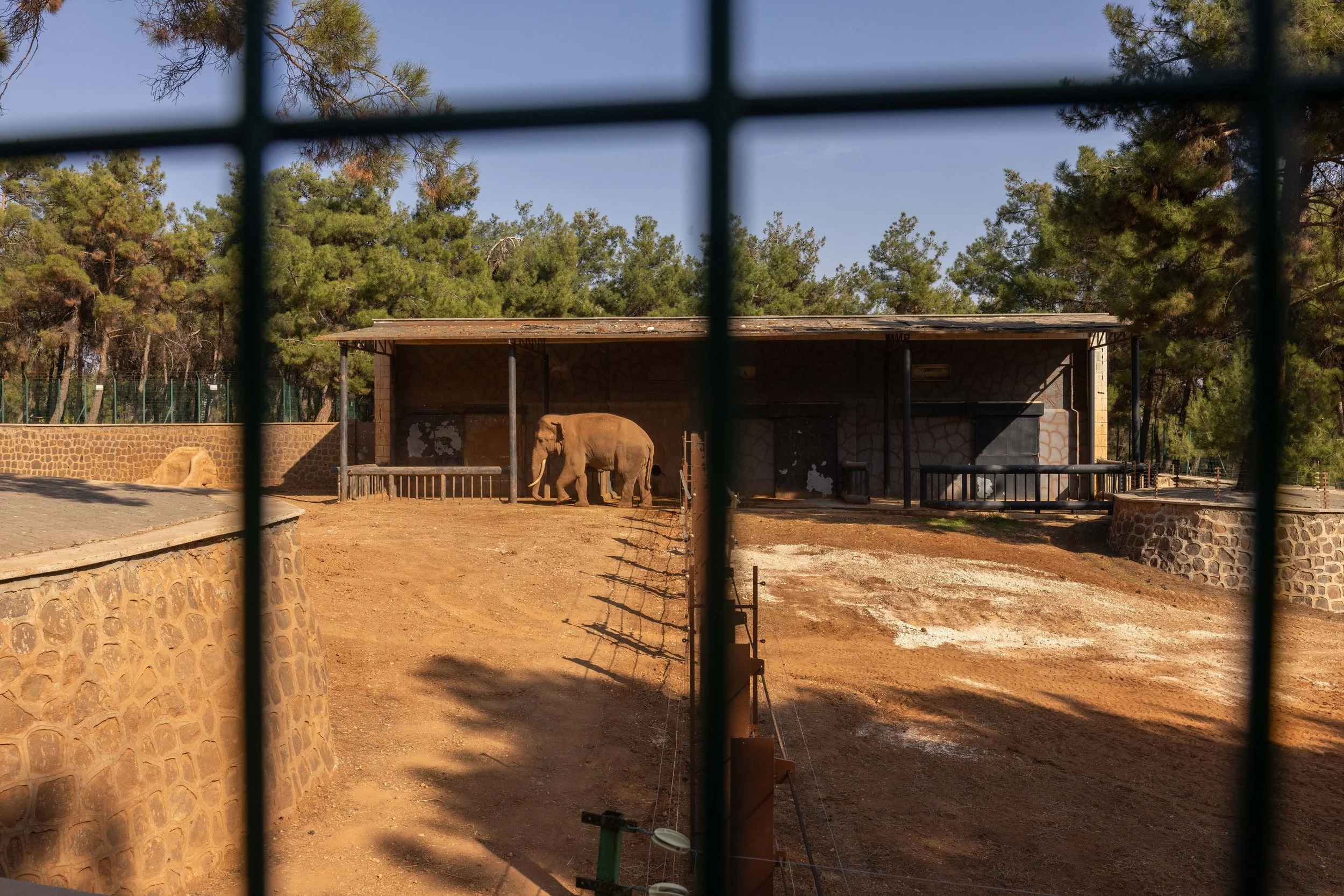
An elephant living alone in Gaziantep Zoo, November 2025, Deniz Tapkan Cengiz
At Weeping Elephant Project, we often encounter a similar contradiction in public discussions about elephant captivity. Institutions frequently speak about populations, breeding programs, and species management, while the lived experiences of individual elephants receive far less attention. An elephant may technically belong to a “conservation program, but that fact alone tells us very little about the quality of her life. Is she living with meaningful social companions? Can she exercise choice and autonomy? Does her environment allow her to engage in the behaviors that define her species? These questions are often far more revealing than any institutional mission statement.
Near the end of Tapkan’s essay, she reflects on the growing number of people who are no longer comfortable with captivity. Through her reporting and advocacy work, she’s received messages from individuals who remember seeing distressed animals in zoos, who question why elephants are still kept alone, and who no longer wish to support institutions built around displaying wild animals for entertainment. What emerges from these conversations is the sense that public attitudes are shifting more quickly than the institutions themselves.
The debate over zoos is often framed as a conflict between animal advocates and zoological institutions, but that framing misses a broader cultural change that’s already underway. Many people are reconsidering assumptions that previous generations rarely questioned. They are asking whether conservation can be achieved without captivity, whether education requires confinement, and whether the needs of animals should take precedence over the expectations of visitors.
Real change rarely begins with institutions. More often, it begins when the public starts to see something differently than it did before. Once that happens, the institutions that seemed permanent can suddenly begin to look outdated.
The future of zoos will ultimately be determined not only by accreditation standards, breeding programs, or management practices, but by whether the public continues to accept the idea that wild animals should spend their lives in captivity for our benefit. Judging by the conversations happening today, that acceptance can no longer be taken for granted.
We encourage you to read Deniz Tapkan Cengiz’s essay, The Rise of Collective Consciousness and the Closure of Zoos, which inspired many of the questions explored here. For more about Tapkan’s work, check out this We Animals profile, and explore the rest of the Animal Politics Substack as well.
